
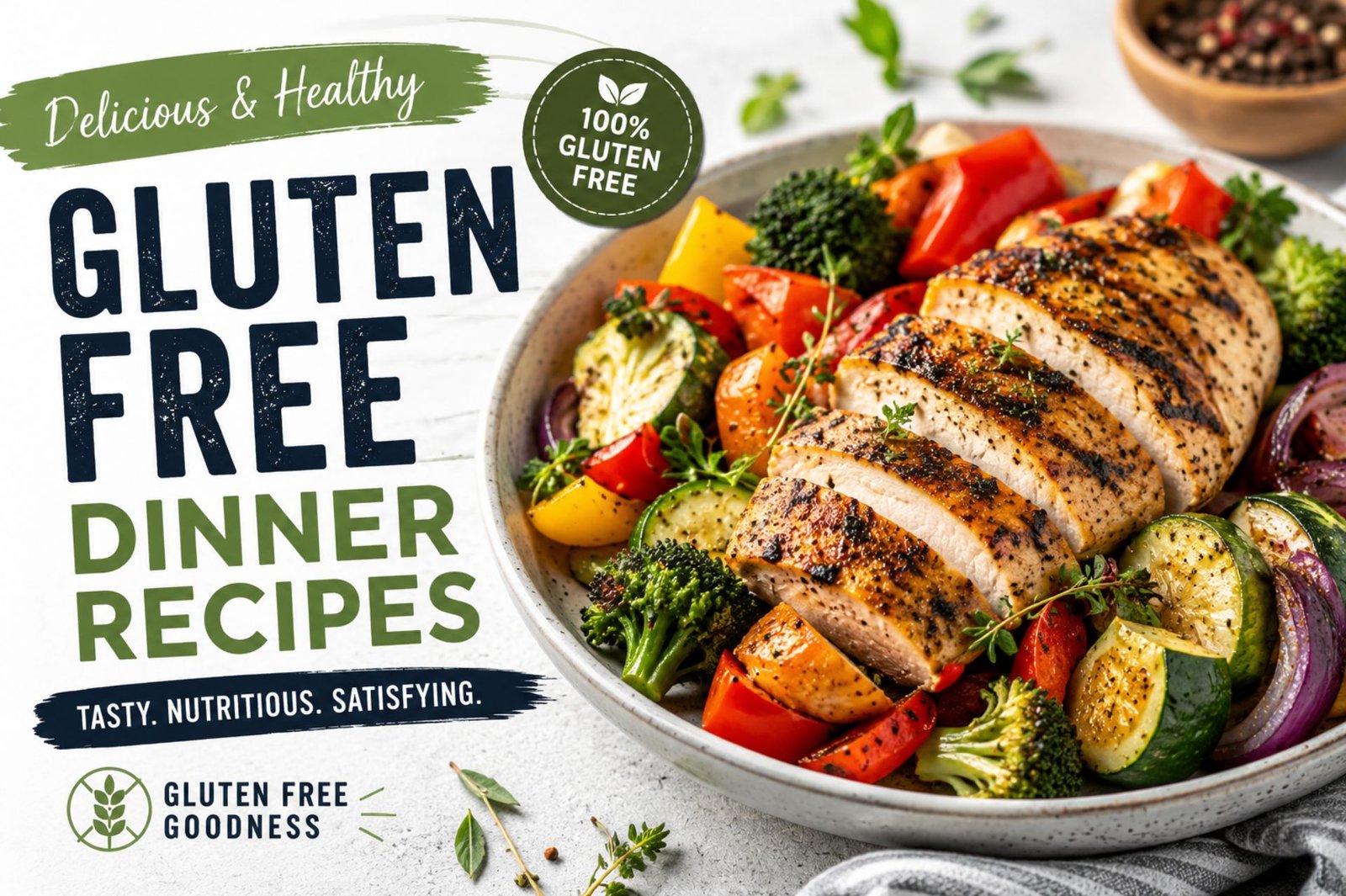
Gluten-Free Dinners That Don’t Feel Like a Compromise
Four complete, family-tested recipes — plus the real fixes for the problems gluten-free cooks actually run into: bland food, cross-contamination worries, picky eaters, and the 6 p.m. panic when nothing in the pantry feels safe to eat.
Gluten-free doesn’t have to mean giving something up
Somewhere between the diagnosis, the sensitivity, or the choice to just feel better, gluten-free cooking picks up a reputation it doesn’t deserve: expensive, bland, and complicated. You’ve probably stood in your kitchen at 6 p.m., hungry, staring at a fridge full of ingredients that don’t obviously go together, wondering if tonight is another rice-cakes-and-guilt kind of dinner.
It isn’t a willpower problem. It’s a recipe problem — most “gluten-free” recipes online are afterthoughts, built by swapping one bad ingredient for another. The four dinners below were built the other way around: naturally gluten-free from the first ingredient, built for real appetites, and tested on people who weren’t told they were “eating gluten-free” — they just ate dinner.
“Everything tastes like a substitute”
Gluten-free swaps often chase the texture of wheat and lose in the trade. These recipes never ask a vegetable or a protein to pretend to be pasta or bread — they lean into what they actually are.
“I’m scared of hidden gluten”
Soy sauce, bouillon, salad dressing, even some spice blends carry gluten as a filler. Every ingredient below flags exactly where to double-check a label.
“My family won’t eat ‘diet food'”
Nobody who’s tried the balsamic chicken or the meatballs below has asked what’s missing. These are built to be judged as dinner first, gluten-free second.
“I don’t have 90 minutes on a Tuesday”
Every recipe is on the table in under 40 minutes, and each one gives you a make-ahead step for the nights when even 40 minutes feels like too much.
Four dinners, zero guesswork
Tap any card to jump straight to the full recipe, ingredient list, and step-by-step method.
Grilled Balsamic Chicken & charred summer vegetables
This is the recipe for the night you need dinner to just work. The marinade does the heavy lifting — tangy balsamic, garlic, and a whisper of honey that caramelizes into a dark, sticky char on the grill. The vegetables cook in the same pan, so there’s one pan to wash and one plate that looks like it came from a restaurant.
Ingredients
For the chicken
- 4 boneless, skinless chicken breasts (about 6 oz each)
- ⅓ cup balsamic vinegar
- 3 tbsp olive oil
- 3 cloves garlic, minced
- 1 tbsp fresh rosemary, chopped (or 1 tsp dried)
- 1 tsp Dijon mustard (check label — most are GF, some add wheat starch)
- 1 tsp honey
- ¾ tsp salt, ½ tsp black pepper
For the vegetables
- 2 zucchini, sliced into ½-inch rounds
- 1 yellow squash, sliced into ½-inch rounds
- 1 red onion, cut into thick wedges
- 1½ cups cherry tomatoes, left whole
- 2 tbsp olive oil, salt and pepper to taste
- 2 tbsp fresh parsley, chopped, for serving
Method
- Whisk the balsamic vinegar, olive oil, garlic, rosemary, mustard, honey, salt, and pepper in a shallow dish or zip-top bag.
- Add the chicken and turn to coat fully. Marinate at least 30 minutes at room temperature, or up to 4 hours in the fridge.
- Heat a grill or grill pan to medium-high. Toss the zucchini, squash, and onion with the remaining olive oil, salt, and pepper.
- Shake excess marinade off the chicken and grill for 6–7 minutes per side, until it reaches 165°F internally and has good char marks.
- Grill the vegetables alongside in a grill basket or directly on the grates, 3–4 minutes per side, adding the cherry tomatoes in the last 2 minutes just until they blister.
- Rest the chicken 5 minutes before slicing — this keeps it juicy instead of dry. Plate over the vegetables and scatter with parsley.
Garlic Butter Shrimp with cauliflower rice
For the nights you want takeout but don’t want the 45-minute wait or the guessing game about what’s actually in the sauce. Shrimp cooks in minutes, cauliflower rice takes on whatever you season it with, and the whole dish comes together faster than delivery would arrive.
Ingredients
For the shrimp
- 1½ lb large shrimp, peeled and deveined
- 3 tbsp butter
- 4 cloves garlic, minced
- 1 tsp smoked paprika
- Pinch of red pepper flakes
- Juice of 1 lemon
- Salt and pepper to taste
For the cauliflower rice
- 1 large head cauliflower, riced (or 4 cups pre-riced)
- 1 tbsp olive oil
- ½ red bell pepper, diced
- ½ cup broccoli florets, chopped small
- 2 tbsp gluten-free tamari or coconut aminos (regular soy sauce contains wheat)
- Fresh cilantro or parsley, chopped, for serving
Method
- If using a whole cauliflower, pulse florets in a food processor until they resemble rice grains. Don’t over-process into paste.
- Heat olive oil in a large skillet over medium heat. Add bell pepper and broccoli, sauté 3 minutes until just tender.
- Add the cauliflower rice and gluten-free tamari. Cook 5–7 minutes, stirring occasionally, until tender but not mushy. Set aside and cover to keep warm.
- In a separate pan, melt the butter over medium heat. Add garlic, paprika, and red pepper flakes, and cook 30 seconds until fragrant.
- Add the shrimp in a single layer. Cook 2 minutes per side, until pink and opaque — shrimp go from perfect to rubbery fast, so watch closely.
- Remove from heat, squeeze over the lemon juice, and toss to coat. Serve over the cauliflower rice, finished with fresh herbs.
Zucchini Noodles & turkey meatballs in marinara
The recipe for anyone who has grieved pasta night. This isn’t zucchini pretending to be spaghetti — it’s a lighter noodle built to carry a rich, garlicky marinara and meatballs that hold together properly, no gluten-free breadcrumb gumminess in sight.
Ingredients
For the meatballs
- 1 lb ground turkey
- ¼ cup gluten-free breadcrumbs or almond flour
- 1 large egg
- ¼ cup grated Parmesan
- 2 cloves garlic, minced
- 1 tbsp fresh parsley, chopped
- ½ tsp Italian seasoning, salt and pepper to taste
For the sauce & noodles
- 24 oz marinara sauce (check label — some brands thicken with wheat flour), or homemade from 28 oz crushed tomatoes
- 2 tbsp olive oil, 3 cloves garlic, 1 tsp dried oregano, fresh basil
- 4 medium zucchini, spiralized into noodles
- Salt, plus extra Parmesan and basil for serving
Method
- Preheat the oven to 400°F. Line a baking sheet with parchment.
- Combine turkey, breadcrumbs, egg, Parmesan, garlic, parsley, and seasoning in a bowl. Mix gently — overworking the meat makes tough meatballs. Form into 16 balls.
- Bake 18–20 minutes, until browned and cooked through (165°F internally).
- Meanwhile, warm the marinara in a large pot with olive oil, garlic, and oregano over medium-low heat, 10 minutes.
- Add the baked meatballs to the sauce and simmer gently 5–10 minutes so they soak up flavor.
- Just before serving, sauté the zucchini noodles in a dry pan over medium-high heat for 2–3 minutes only, until just tender — they release water fast, so cook them last and serve immediately.
- Plate the noodles, top with meatballs and sauce, and finish with Parmesan and torn basil.
Herb-Crusted Salmon & roasted asparagus
One sheet pan, one 15-minute stretch in the oven, and a dinner that looks and tastes like you planned it days in advance. This is the recipe to keep for the evenings when you want something that feels special without asking anything extra of you.
Ingredients
For the salmon
- 4 salmon fillets (about 6 oz each)
- 2 tbsp olive oil
- 1 tbsp Dijon mustard (confirm gluten-free label)
- 1 clove garlic, minced
- 1 tsp smoked paprika
- 1 tsp dried dill
- Salt and pepper to taste
For the vegetables
- 1 bunch asparagus, tough ends trimmed
- 1 tbsp olive oil, salt and pepper
- 1 lemon, sliced, plus extra wedges to serve
- Fresh parsley, chopped, for garnish
Method
- Preheat the oven to 425°F. Line a sheet pan with parchment.
- Toss the asparagus with olive oil, salt, and pepper. Arrange along one side of the pan.
- Whisk together olive oil, Dijon, garlic, paprika, and dill. Brush generously over the salmon fillets.
- Place the salmon on the other side of the pan, skin-side down, topped with a few lemon slices.
- Roast 12–15 minutes, until the salmon flakes easily with a fork and the asparagus is just tender — thinner spears will cook faster, so check at 10 minutes.
- Garnish with parsley and serve with extra lemon wedges on the side.
The habits that make gluten-free cooking easy for good
Recipes fix tonight’s dinner. These fix the whole month.
Build a pantry that’s already safe
Keep gluten-free tamari, a trusted GF marinara, cornstarch or arrowroot for thickening, and a few certified GF stocks on hand. When the base pantry is safe, you stop having to think about it for every meal.
Prevent cross-contamination at home
If anyone else in the house eats regular bread or pasta, keep a separate toaster, cutting board, and a labeled jar of butter or peanut butter. Crumbs travel further than people expect — this one habit prevents most accidental exposure.
Win over skeptical family members
Don’t announce the swap. Serve the dish on its own merits — a good marinade or a properly seared piece of salmon earns approval before anyone asks what’s missing from the plate.
Prep once, eat three times
Marinate two proteins on Sunday, spiralize a week’s worth of zucchini, and rice a whole head of cauliflower at once. Fifteen minutes of prep buys back thirty minutes on a weeknight.
Questions people search before they search a recipe
Is a gluten-free diet actually healthier, or just different?
For someone with celiac disease or a diagnosed gluten sensitivity, it’s medically necessary. For everyone else, gluten itself isn’t the deciding factor — what matters is what replaces it. These recipes lean on real vegetables, lean proteins, and whole foods rather than processed gluten-free substitutes, which is where the actual health benefit comes from.
How do I make gluten-free dinners my whole family will eat, not just tolerate?
Lead with flavor, not framing. A well-seared piece of protein, a proper marinade, and vegetables cooked until they have color and char will win the table over on taste alone. Save the “by the way, this is gluten-free” for after the plates are empty.
What gluten-free pantry staples should I always keep stocked?
Gluten-free tamari or coconut aminos, a certified gluten-free marinara or crushed tomatoes, cornstarch or arrowroot powder for thickening sauces, gluten-free breadcrumbs or almond flour, and a good olive oil. With these five on hand, most weeknight recipes are within reach without a special grocery trip.
How do I avoid cross-contamination when I’m the only one in the house eating gluten-free?
Focus on the few points where crumbs and residue actually travel: a shared toaster, a wooden cutting board with knife grooves, and communal condiment jars where a knife might dip in twice. Dedicating just those few items solves the majority of real-world cross-contamination risk at home.
Can these recipes be meal-prepped for the week?
Yes. The chicken and marinade, the meatballs, and the salmon’s herb rub all hold well in the fridge for up to two days before cooking. Cauliflower rice keeps for four days once cooked. The one exception is zucchini noodles — spiralize them ahead if you like, but cook them fresh each time, since they lose their texture once cooked and reheated.
Dinner was never the hard part. Finding a recipe that respects your plate was.
Pick one of these four for tonight, keep the others bookmarked for the rest of the week, and let the pantry habits do the quiet work in between. That’s the whole system.
Here’s to a kitchen that finally feels like it’s on your side.