
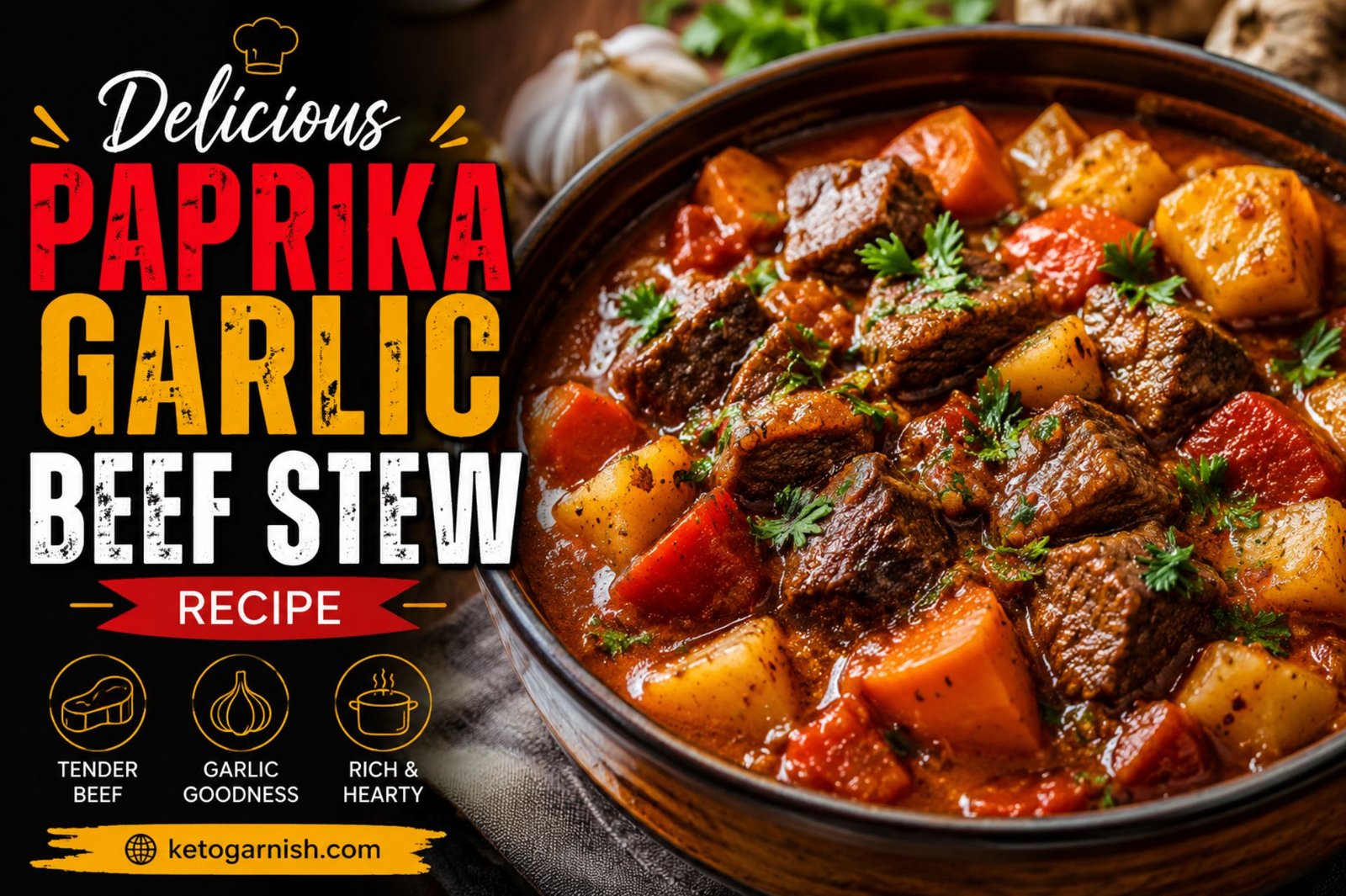
The stew that finally stops falling apart — or refusing to.
Rubbery meat. Watery gravy. A recipe that says “35 minutes” and lies. This paprika and garlic beef stew was built to fix all three, with a method anyone can follow the first time.

~2 hrs
1 pot
Why most beef stew recipes let you down
If you’ve ever pulled a pot of stew off the stove and found chewy meat sitting in thin, one-note gravy, it wasn’t you. It was the recipe. Here’s what usually goes wrong — and exactly what this one does differently.
The meat turns rubbery
Most recipes rush the simmer or use a lean cut that was never meant to braise. Chewy beef isn’t bad luck — it’s undercooked collagen, and it needs time, not more heat.
The gravy tastes flat
Paprika and garlic dumped in raw never bloom into flavor. Without toasting the spices in fat first, you get color without depth — a stew that looks rich and tastes thin.
There’s “no time” on a weeknight
Real braising takes patience, but almost none of it is hands-on. The fix isn’t a shortcut that sacrifices flavor — it’s knowing exactly where you can walk away.
Built around one cut of meat and two spices, not a long ingredient list
This isn’t a stew that hides behind a dozen seasonings. Smoked paprika and a generous hand of garlic carry almost all the flavor, which means there’s nowhere for shortcuts to hide — sear the beef properly, bloom the spices in the fat, and let the pot do the rest.
“Comfort in every bite” only works if the meat actually falls apart. Everything in this recipe is aimed at that one outcome.
It’s the kind of dinner that fogs up the kitchen window and quiets the table — built for a cold evening when you want something to simmer while you do something else with your afternoon.

Paprika & Garlic Beef Stew
Chuck roast, smoked paprika, garlic, and root vegetables, braised low and slow into a thick, deeply savory gravy.
Ingredients
The Beef- 2 lbs (900g) beef chuck roast, cut into 1.5-inch cubes
- 2 tbsp olive oil, divided
- Salt and black pepper, to season
- 1 large yellow onion, diced
- 5 garlic cloves, minced
- 2 tbsp tomato paste
- 2 tbsp smoked paprika
- 1 tsp sweet paprika
- 3 tbsp all-purpose flour (or cornstarch)
- 4 cups beef broth
- 1 cup dry red wine (optional; sub extra broth)
- 2 bay leaves
- 4–5 sprigs fresh thyme
- 4 medium Yukon gold potatoes, chunked
- 3 large carrots, chunked
- Fresh parsley, chopped, to finish
Method
- Dry and sear the beef. Pat the cubes completely dry, season with salt and pepper. Heat 1 tbsp oil in a heavy pot over medium-high and sear in batches until deeply browned on all sides — don’t crowd the pot. Set the beef aside.≈10 min
- Build the base. Lower heat to medium, add remaining oil, and cook the onion until soft. Add garlic and tomato paste, stirring for 1 minute, then add both paprikas and toast for 30 seconds until fragrant — this step is what gives the gravy real depth.≈6 min
- Add the flour, then deglaze. Stir in the flour to coat the onions, then pour in the wine, scraping up the browned bits from the bottom of the pot.≈2 min
- Simmer low and slow. Return the beef to the pot, add the broth, bay leaves, and thyme. Bring to a gentle simmer, cover, reduce heat to low, and let it cook undisturbed. This is the walk-away stage.1 hr 15 min
- Add the vegetables. Stir in the potatoes and carrots, re-cover, and continue simmering until the beef shreds easily with a fork and the vegetables are tender.35–40 min
- Finish and rest. Discard the bay leaves and thyme stems, taste and adjust salt, and let the stew rest off the heat for 10 minutes — it thickens as it sits. Garnish with parsley and serve.10 min
Prefer to see the searing and simmering in real time?
A visual walkthrough of the same braising method — searing, blooming the spices, and building the gravy — so you can see exactly what “deeply browned” and “gentle simmer” should look like.
If something’s off, here’s what’s actually happening
My beef is still tough after an hour.
Chuck needs time, not heat — an hour is often not enough. Keep it at a gentle simmer (small bubbles, not a rolling boil) for another 30–45 minutes. Boiling too hard actually toughens the muscle fibers faster than it tenderizes them.
The stew tastes flat even with all the paprika.
Paprika loses potency with age and needs fat and heat to release its flavor — if you skipped toasting it in step 2, or the jar is over a year old, that’s usually the culprit. A splash of vinegar or a squeeze of lemon at the end also wakes up a flat-tasting braise.
Can I make this in a slow cooker or Instant Pot?
Yes. Sear the beef and build the base on the stovetop first — that step is non-negotiable for flavor — then transfer everything to a slow cooker for 7–8 hours on low, or a pressure cooker for 35 minutes on high with a natural release.
My gravy separated or looks greasy on top.
That’s usually excess fat from the sear. Skim it off the surface with a spoon before serving, or make the stew a day ahead — the fat solidifies on top when chilled and lifts off easily.
Want it lower-carb? Here’s the one swap that works
Potatoes are what make this stew feel classic, but they’re also the main source of carbs. If you’re cutting back, swap them without losing the texture that makes a stew satisfying.
Yukon gold potatoes — creamy, starchy, and the best at thickening the gravy naturally as they break down slightly.
Swap in an equal amount of turnip or radish chunks. Add them in the same step as the carrots — they hold their shape and soak up the paprika gravy just as well.
Storing and reheating leftovers
Refrigerator
Store in an airtight container for up to 4 days. Flavor actually improves by day two, once the paprika and garlic settle into the gravy.
Freezer
Cool completely, then freeze in portions for up to 3 months. Potatoes soften further after freezing but hold their flavor well.
Reheating
Warm gently on the stovetop over low heat, stirring occasionally, adding a splash of broth if the gravy has thickened too much overnight.
Cook it once, and you’ll stop reaching for other stew recipes.
This one was built to solve the exact problems that make people give up on homemade stew — tough meat, thin flavor, and no time. Follow the searing and simmering steps as written the first time, then make it yours.
Back to the Recipe