
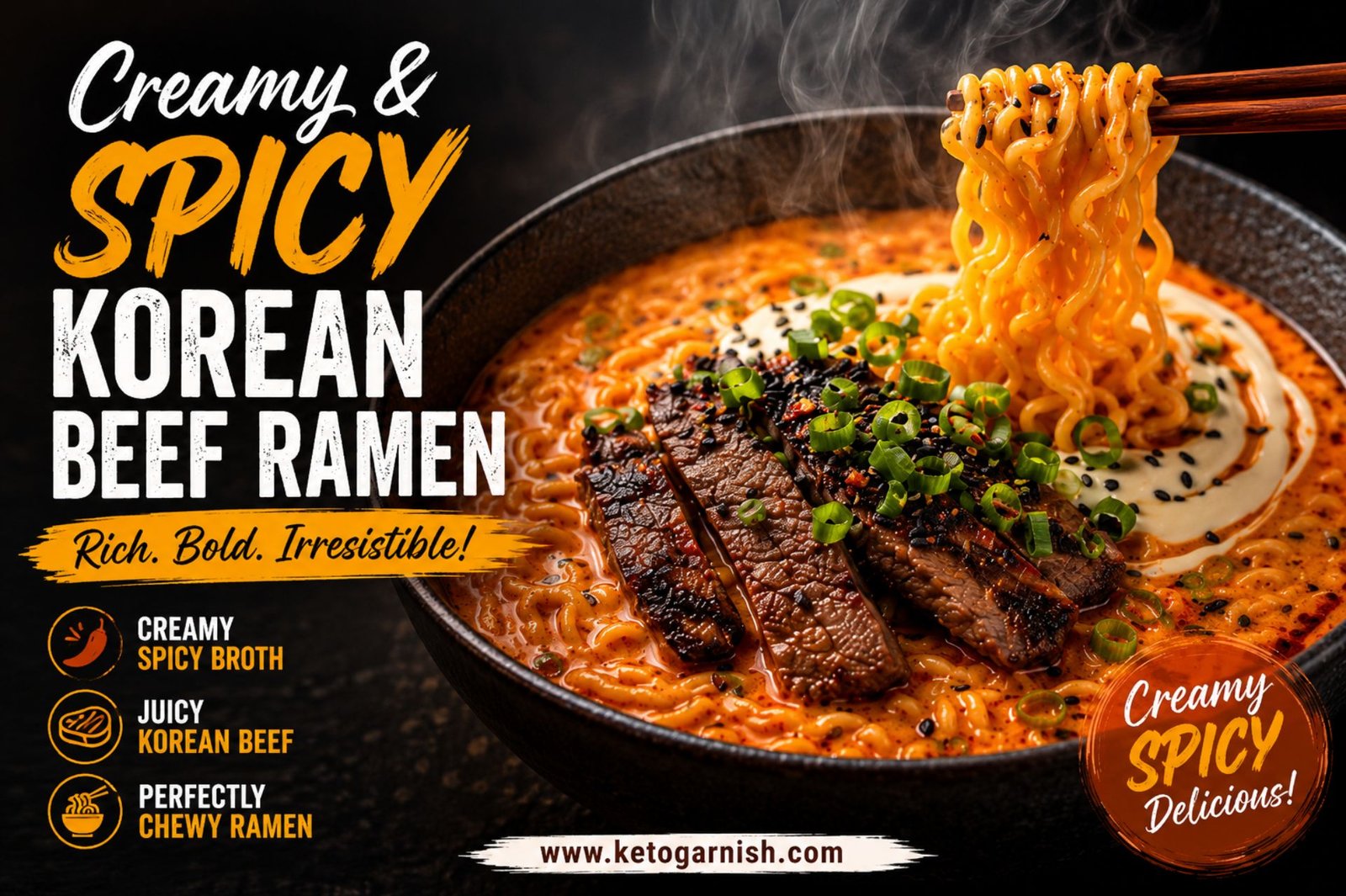
Creamy & Spicy
Korean Beef Ramen
The bowl that turns a $4 packet of noodles into something you’d happily pay restaurant prices for — seared bulgogi-style steak, a gochujang broth bloomed low and slow, and a swirl of cream that makes every sip taste like it took hours. It took twenty minutes.
You’re not actually craving instant noodles.
You’re craving the idea of instant noodles — that ten-minute promise of something hot and comforting after a day that ran long. But the packet version never delivers. The broth tastes like salt and nothing else. The “flavor dust” clumps. You eat it anyway, then twenty minutes later you’re standing in front of the fridge again, still hungry, still a little disappointed in yourself.
Takeout solves the flavor problem but creates two new ones: it’s $19 a bowl, and it’s lukewarm by the time it reaches your table. So most nights you just… don’t. You default to something forgettable because the good version feels like too much effort for a Tuesday.
Flavor packets fall flat
One-dimensional salt with no depth, no richness, no reason to crave it twice.
Takeout is a gamble
Expensive, inconsistent, and never arrives as hot as it left the kitchen.
“Real” recipes feel like a project
Twelve-ingredient broths and two-day marinades don’t fit a Tuesday night.
What actually makes a bowl taste like a restaurant made it
It isn’t a secret ingredient. It’s three small, deliberate moves that a rushed weeknight cook usually skips — and skipping any one of them is exactly why homemade ramen tastes “fine” instead of unforgettable.
Sear the beef hard, then leave it alone
A screaming-hot, dry pan gives the steak a deep mahogany crust in under three minutes a side. That crust is where the flavor lives — it’s what makes the beef taste grilled, not boiled. Resting it for five minutes before slicing keeps every drop of juice inside the meat instead of on your cutting board.
Bloom the chili paste in oil before it touches liquid
Gochujang and gochugaru are fat-soluble — their real flavor only unlocks when they hit hot oil, not cold broth. Sixty seconds of sizzling the paste with garlic and ginger turns a flat, one-note heat into something layered: smoky, sweet, and slow-building instead of just sharp.
Temper the cream, don’t dump it
This is the single most common mistake in creamy broths: pouring cold cream into a hard-boiling pot. It splits, and once it splits, there’s no fixing it. Pull the heat down first, then stream the cream in slowly while stirring. You’ll get a broth that’s silky and cohesive instead of greasy and separated.
Creamy & Spicy Korean Beef Ramen
Rich. Bold. Irresistible.
A gochujang-and-bone-broth base finished with cream, piled high with charred steak and a nest of noodles.
Ingredients
- 1 lbFlank or skirt steak, thinly sliced against the grain
- 2 packsRamen noodles (fresh or dried)
- 2 tbspGochujang (Korean chili paste)
- 1 tbspGochugaru (Korean chili flakes)
- 3 cupsBeef bone broth or stock
- 1/2 cupHeavy cream, room temperature
- 3 clovesGarlic, minced
- 1 tbspFresh ginger, grated
- 2 tbspSoy sauce or tamari
- 1 tbspBrown sugar or monk fruit sweetener
- 1 tbspToasted sesame oil
- 2 tbspNeutral oil, divided
- 3Green onions, sliced
- 1 tbspBlack and white sesame seeds
- to tasteSalt and cracked pepper
Method
-
Sear the steak 4 min
Pat the beef bone-dry with paper towel and season with salt. Heat 1 tbsp oil in a pot until just smoking, then sear the steak in a single layer for 2–3 minutes per side, until deeply browned. Transfer to a plate and rest — don’t slice yet.
-
Bloom the aromatics 2 min
In the same pot, lower the heat to medium and add the remaining oil, garlic, ginger, gochujang and gochugaru. Stir constantly for 60–90 seconds until deeply fragrant and slightly darkened — this step builds the entire flavor of the broth.
-
Build the broth 10 min
Pour in the bone broth, soy sauce and sweetener. Scrape up any browned bits from the bottom of the pot. Bring to a gentle simmer and let it cook uncovered for 8–10 minutes so the chili paste fully dissolves and the flavors concentrate.
-
Temper in the cream 2 min
Reduce the heat to low. Stir the broth continuously while pouring in the cream in a slow, steady stream. Do not let it return to a hard boil once the cream is in, or it may split. Taste and adjust salt.
-
Cook the noodles 3 min
Boil the noodles separately according to package directions, one minute short of done — they’ll finish softening in the hot broth. Drain well.
-
Assemble 2 min
Slice the rested steak against the grain. Divide noodles between four bowls, ladle over the broth, and top with sliced steak, green onions, sesame seeds and an extra pinch of gochugaru for color and a final hit of heat.
*Net carbs calculated using the shirataki noodle swap; standard wheat ramen will run higher.
Where most home cooks go wrong — and the exact fix
These are the four support-desk questions we hear most about creamy ramen broths. Read this before you cook, not after.
Broth tastes watery and thin, even after simmering.
You likely skipped blooming the paste in oil. Chili flavor needs fat to open up — simmering in liquid alone leaves it muted. Bloom first, always.
Cream broke into greasy, curdled flecks.
The broth was too hot when the cream hit it. Bring it to a bare simmer, use room-temperature cream, and stir while pouring slowly — never dump it in cold.
Steak came out chewy instead of tender.
Two culprits: slicing with the grain instead of against it, or overcrowding the pan so it steams instead of sears. Slice thin, against the grain, and cook in batches if needed.
Noodles turn to mush by the time you eat.
Cook noodles separately and slightly underdone, then add broth just before serving. Noodles left sitting in hot broth keep cooking and go soft fast.
See the sear, the bloom, and the swirl in real time
If you learn better by watching a knife move than reading a paragraph, this walkthrough covers the same gochujang-beef technique — the sear, the bloom, and the broth build — start to finish.
Swaps that actually work
This recipe is a frame, not a cage. Once the three techniques above are locked in, everything inside them is negotiable.
Before you start cooking
Can I make the broth ahead of time?
Yes — make it through step 3 (before the cream) up to two days ahead and refrigerate. Reheat gently, then temper in the cream fresh right before serving so it stays silky.
What if I can’t find gochujang or gochugaru?
Gochujang can be approximated with 1 tbsp sriracha plus 1 tsp miso paste. For gochugaru, Korean-style chili flakes or a mild crushed red pepper will get you close, though the smoky depth won’t be identical.
How do I store and reheat leftovers?
Store broth, noodles and steak separately in airtight containers for up to 3 days. Reheat the broth gently on the stove — never boil it hard, or the cream may separate — and add fresh noodles rather than reheating soggy ones.
Is this actually keto-friendly?
With the shirataki or kelp noodle swap and a sugar-free sweetener, yes — it lands around 4–6g net carbs per bowl. With traditional wheat ramen noodles, treat it as a moderate-carb comfort meal instead.
Your weeknight ramen problem ends tonight.
Save this recipe, pin it for later, or scroll back up and start the sear — dinner is twenty minutes away.
Jump to the recipe