
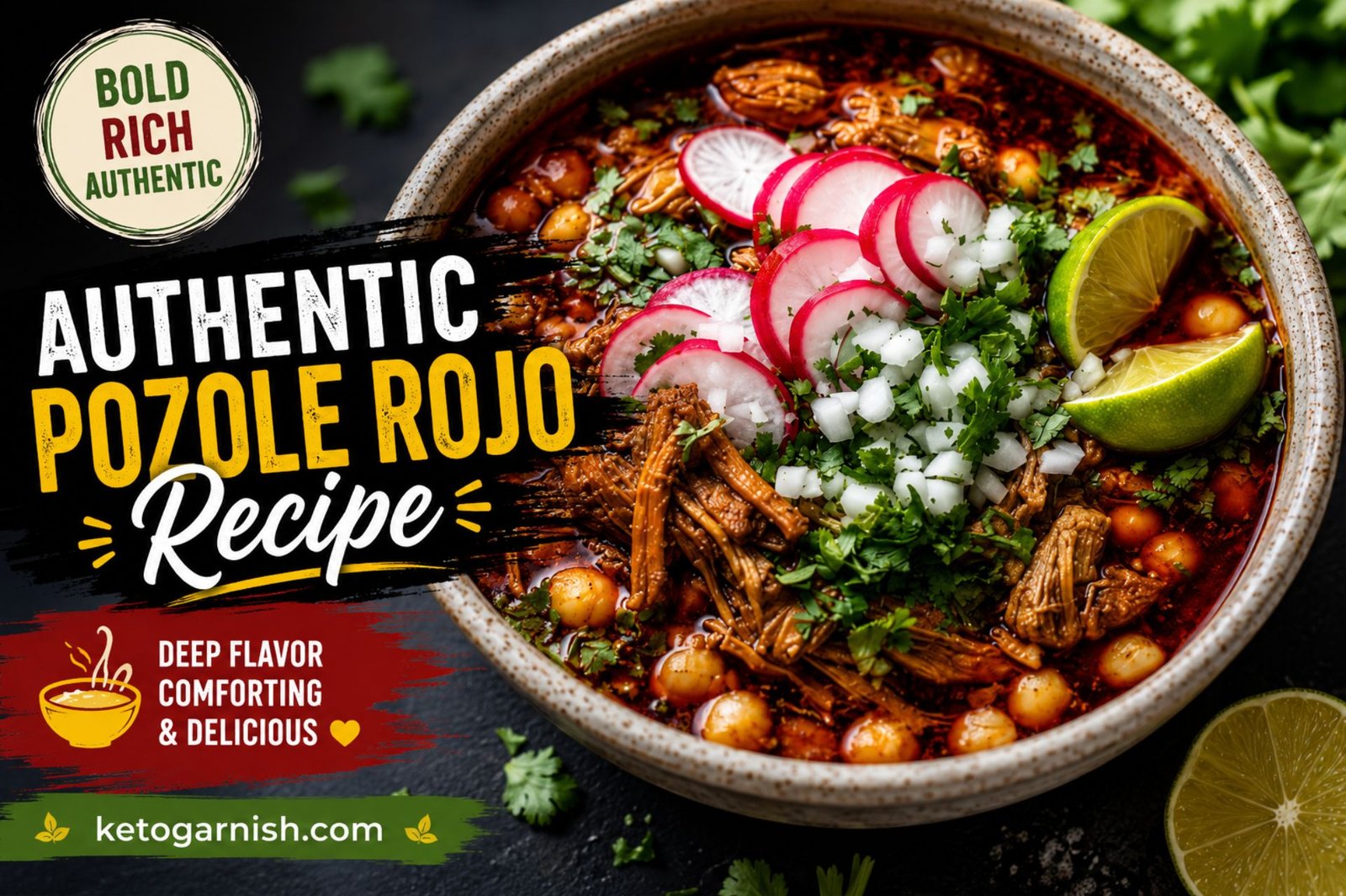
The pozole rojo your abuela would actually approve of.
A deep, brick-red pork and hominy soup built from scratch with real dried chiles — not chili powder from a jar. This is the long, slow, worth-it version, broken into steps that actually make sense the first time you make it.
Most “authentic” pozole recipes online quietly skip the parts that actually matter.
You’ve probably landed here after a pale, watery bowl that tasted more like paprika soup than the pozole you remember from a wedding, a christening, or your tía’s kitchen on New Year’s Eve. It’s not your fault — most recipes rush the chile step or use powder instead of pods, and that’s where the flavor lives. Here’s what actually goes wrong, and exactly how this recipe fixes it.
The broth turns out pale or orange, not deep brick-red
This happens when chile powder or a splash of enchilada sauce replaces real dried pods, or when the chiles aren’t toasted before soaking.
The pork is either tough or falling into shreds
Boiling too hard breaks down the fat too fast and dries out the meat, while under-simmering leaves it chewy and disappointing.
You don’t know which chiles to buy or how spicy it’ll be
The chile aisle is intimidating, and most posts never explain what each pod actually contributes to the pot.
It tastes flat, even after adding more salt
Flat pozole is usually missing acid and layered aromatics — garlic and cumin bloomed in the chile sauce, not just tossed in raw.
Authentic Pozole Rojo, Start to Finish
This is a two-part recipe — a red chile sauce, and a pork-and-hominy broth — that meet in the middle. Read it once through before you shop; it’ll make the whole process click.
Pozole Rojo
For the red chile sauce
- 8 dried guajillo chiles, stemmed and seeded
- 3 dried ancho chiles, stemmed and seeded
- 1–2 dried chiles de árbol (optional, for heat)
- 4 cloves garlic, unpeeled
- 1/2 tsp whole cumin seeds
- 1/4 white onion, roughly chopped
For the pork & hominy broth
- 4 lb pork shoulder, cut into 2-inch chunks (bone-in if you can get it)
- 1 white onion, halved
- 8 garlic cloves, whole
- 2 bay leaves
- 1 tbsp dried Mexican oregano
- 2 tsp kosher salt, plus more to taste
- 12 cups water
- 2 (25-oz) cans white hominy, drained and rinsed
Garnish bar (build your own bowl)
- Thinly sliced radishes
- Shredded cabbage or iceberg lettuce
- Diced white onion
- Chopped fresh cilantro
- Lime wedges
- Dried oregano, crushed between your fingers
- Crushed chile piquín or árbol flakes
- Tostadas or fried corn tortillas, for the side
Kitchen notes
Look for guajillo and ancho pods at any Mexican grocery or the international aisle — they should be pliable, not brittle. Pliable means fresher, and fresher means better color and flavor. If your hominy is dried instead of canned, soak it overnight and simmer separately until tender before adding.
Seven steps, no shortcuts that hurt the flavor
Toast the chiles
Wipe the guajillo and ancho pods clean, then toast them in a dry skillet over medium heat, 20–30 seconds per side, just until fragrant and slightly darkened. Do not let them blacken or the sauce will turn bitter.
Soak and blend the sauce
Cover the toasted chiles with 3 cups of hot water and let them soften for 15 minutes. Blend the softened chiles with the garlic, cumin, onion, and 1.5 cups of the soaking liquid until completely smooth. Strain through a fine mesh sieve to remove the tough skins.
Simmer the pork
Place the pork, halved onion, whole garlic cloves, bay leaves, and salt in a large stockpot with the water. Bring to a boil, then immediately drop to a gentle simmer. Skim off any foam that rises in the first 15 minutes.
Let it go low and slow
Simmer uncovered for 2 to 2.5 hours, until the pork shreds easily with a fork. Keep the heat low enough that the surface barely trembles — a hard boil is the single most common reason pozole meat turns out tough.
Combine and season
Remove the onion halves and bay leaves. Stir the strained red chile sauce and dried oregano into the pot. Add the drained hominy and simmer, uncovered, for another 30–40 minutes so the flavors marry and the hominy warms through.
Taste and adjust
Pozole needs more salt than you’d expect — taste and season in small additions until the broth tastes rounded, not just salty. If it’s thinner than you’d like, simmer uncovered a little longer; it will never thicken like a stew, and that’s correct.
Serve family-style
Ladle into deep bowls and let everyone build their own with radish, cabbage, onion, cilantro, oregano, chile flakes, and a generous squeeze of lime added right at the table.
“Pozole isn’t really finished in the pot. It’s finished at the table, bowl by bowl, by whoever’s eating it.” — a truth every Mexican kitchen agrees on
Prefer to see the technique before you commit a whole afternoon to it?
This walkthrough shows the chile-toasting and blending stage in real time — the part that’s hardest to picture from text alone.
The questions everyone asks before their first pot
Q. Why is my broth pale instead of deep red?
Almost always one of two culprits: the chiles weren’t toasted before soaking, which mutes both color and flavor, or the sauce wasn’t strained, leaving tough skins that dull the finished color. Toast until just fragrant, blend thoroughly, and always push it through a fine mesh sieve.
Q. Can I use canned hominy instead of dried?
Yes, and most home cooks do — canned hominy just needs a good rinse and 30–40 minutes in the finished broth to warm through and soften slightly. Dried hominy (sometimes labeled “pozole corn”) needs an overnight soak and a separate 2–3 hour simmer until tender before it joins the pot.
Q. My pork came out tough and stringy — what happened?
That’s a sign the broth boiled too hard. A rolling boil seizes the muscle fibers before the connective tissue has time to break down. Keep it at a bare simmer — a few lazy bubbles breaking the surface — for the full 2 to 2.5 hours.
Q. How spicy is pozole rojo, really?
As written, this recipe lands mild-to-medium — guajillo brings fruity depth more than heat, and ancho is even milder. Add one or two chiles de árbol to the sauce for real heat, or leave heat entirely up to the table by serving chile piquín flakes on the side.
Q. Can I make this in a slow cooker or Instant Pot?
Yes. Slow cooker: sear the pork first if you can, then cook on low for 7–8 hours before adding the chile sauce and hominy for the last 45 minutes. Instant Pot: pressure cook the pork with the broth ingredients for 45 minutes with a natural release, then stir in the chile sauce and hominy and simmer on sauté for 15 minutes.
Q. How long does it keep, and does it freeze well?
Pozole keeps beautifully — refrigerate up to 4 days, and the flavor actually deepens overnight. For freezing, leave out the hominy if you plan to freeze a portion, since it can turn slightly grainy after thawing; freeze the broth and pork up to 3 months, then add freshly rinsed hominy when you reheat.
Q. What’s the difference between rojo, verde, and blanco?
Pozole rojo gets its color and depth from dried red chiles like guajillo and ancho. Pozole verde is built on a base of tomatillos, poblano, and herbs. Pozole blanco skips the chile sauce entirely, letting the pork and hominy broth speak for itself, usually served with salsa on the side instead of built in.
Swaps that still respect the original
With chicken
Swap the pork shoulder for 3 lbs bone-in chicken thighs; simmer time drops to about 45 minutes. Shred the meat before returning it to the pot with the chile sauce.
Vegetarian version
Replace the pork and water with vegetable broth and jackfruit or mushrooms, and add an extra can of hominy for body. The chile sauce carries most of the flavor either way.
Turn leftovers into tacos
Strain the shredded pork from leftover pozole, crisp it in a hot pan, and pile it into warm tortillas with the same radish, onion, and cilantro garnish.
This is a Sunday recipe, not a Tuesday one — and that’s the point.
Pozole was never meant to be rushed. Put the pot on, pour something to drink, and let the smell fill the kitchen for a few hours. By the time the garnishes hit the table, you won’t just have soup — you’ll have the kind of Sunday people remember.