
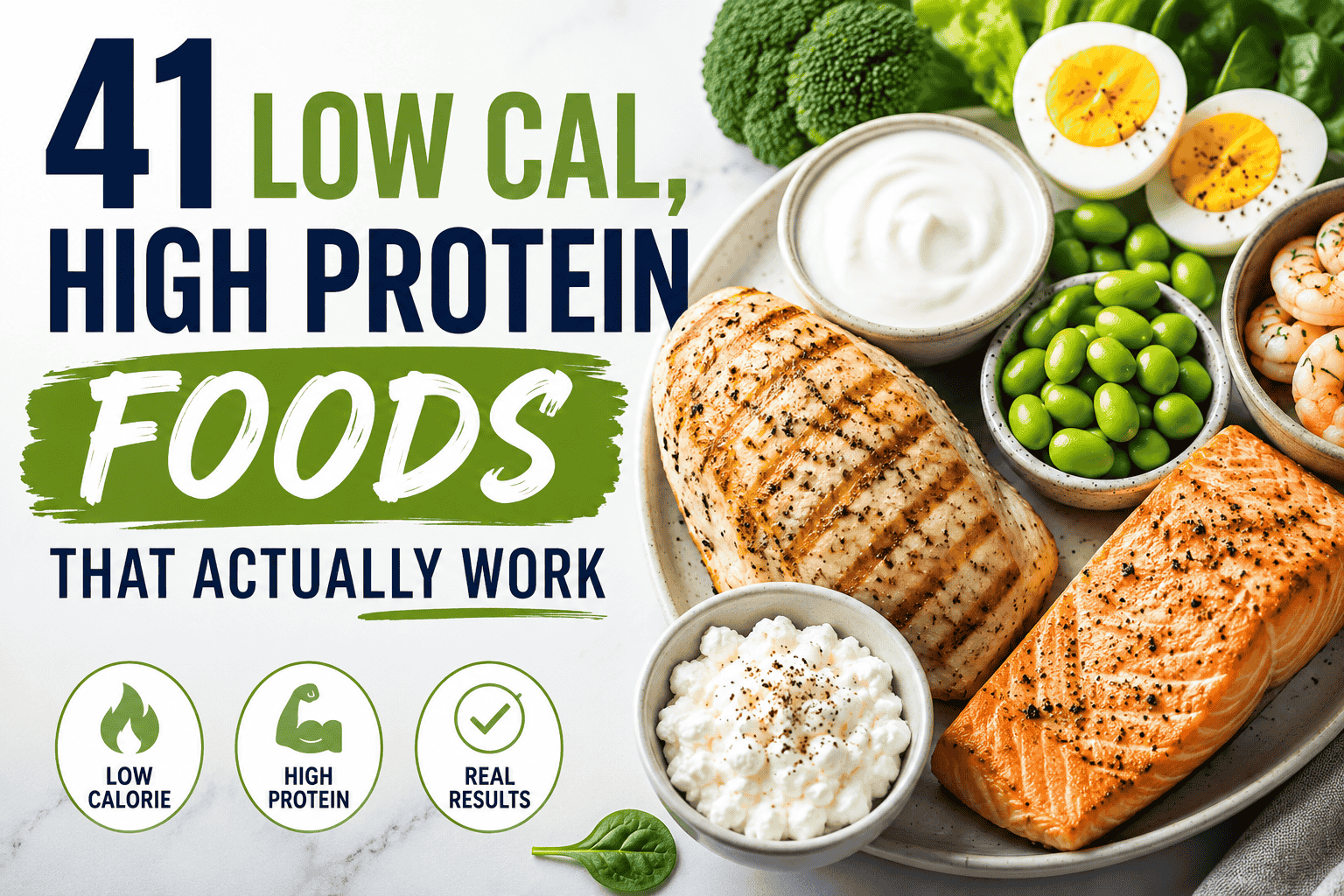
Foods That Actually Work Stop starving yourself. Stop spinning your wheels. Here’s the honest, science-backed guide to eating more, weighing less, and feeling genuinely great — starting today. Read the Full Guide ↓
Your Food Strategy Is. Millions of people wake up every morning with the same quiet frustration. They did everything “right” — counted calories, cut carbs, skipped dessert — and yet the scale didn’t move. Or worse, it did, then crept back. If that sounds familiar, this guide was written for you. The problem isn’t willpower. The problem is that most diet advice ignores one non-negotiable truth: hunger is biological, not a character flaw. When you eat too little protein, your body sends hunger signals that are nearly impossible to override. The solution isn’t discipline — it’s smarter food choices.
Constant Hunger
Low-protein diets leave you unsatisfied hours after eating, triggering snacking cycles that quietly destroy calorie targets before dinner.
Losing Muscle, Not Fat
When protein is scarce, your body burns muscle for fuel — making you weaker and causing your metabolism to drop over time.
The Yo-Yo Trap
Crash diets cause rapid water and muscle loss, followed by fat regain. The cycle repeats endlessly because the root cause is never addressed.
Brain Fog & Low Energy
Protein builds neurotransmitters. Eat too little and your focus, mood, and energy all suffer — making every healthy choice feel harder than it should.
That No Other Nutrient Can
Build Lean Muscle
Protein gives your body the amino acids it needs to repair and grow muscle tissue — making every workout count and your body stronger over time.
Weight Management
Protein has the highest thermic effect of any macronutrient — your body burns up to 30% of its calories just digesting it, vs 3% for fat.
Nutrient Dense
High-protein whole foods come loaded with vitamins, minerals, and fibre that support gut health, immunity, and sustained energy all day long.
Heart Healthy
Many high-protein foods actively lower LDL cholesterol and systemic inflammation, protecting your cardiovascular health over the long term.
Ranked by Impact
Without Blowing Your Calories Here’s something most fitness accounts won’t tell you: the hardest part of eating healthy isn’t the gym. It’s 3 p.m. on a Tuesday — when your energy crashes, your brain begs for sugar, and the vending machine is right there. Why Your Body Craves What You’re Trying to Avoid When you eat refined carbohydrates — white bread, cookies, chips — blood sugar spikes fast. Insulin rushes in to clear it. Blood sugar crashes. Within an hour or two, your brain is screaming for another hit. This isn’t weakness. This is biology doing exactly what it evolved to do. Protein breaks this cycle completely. It digests slowly, keeps blood sugar stable, and suppresses ghrelin — the hormone that signals hunger. Studies show that increasing protein from 15% to 30% of daily calories reduces spontaneous calorie intake by around 440 calories per day. Without counting. Without restriction. Just from eating smarter.
🔬 Research in the American Journal of Clinical Nutrition found a high-protein diet reduced late-night snacking and obsessive food thoughts by 60% in overweight young men — simply from adding more protein to their meals, with no other changes made.
“Eat more to weigh less sounds like a marketing slogan.
But when that ‘more’ is protein, it’s just physiology.”
That Actually Stick
-
01
Anchor Every Meal With Protein First
Before adding anything else to your plate, choose your protein source and build around it. Fibre and healthy fats follow naturally; refined carbs shrink to the margins without a second thought.
-
02
Choose Whole, Unprocessed Foods First
Protein bars and shakes have their place, but whole foods deliver more fibre, micronutrients, and better satiety signals. Use supplements exactly as the name implies — to supplement a real-food foundation, never replace it.
-
03
Pair Protein With Fibre-Rich Vegetables
Protein and fibre are the two most powerful satiety tools — they amplify each other. Protein stabilises blood sugar; fibre slows digestion and feeds your gut microbiome. Broccoli alongside chicken isn’t a compromise. It’s a strategy.
-
04
Hydrate — Protein Processing Requires Water
Your kidneys work harder when processing higher protein intakes. Adequate hydration (at least 8 glasses daily) keeps every metabolic function running efficiently and prevents the fatigue that often gets mistaken for hunger.
-
05
Spread Protein Throughout the Day
Muscle protein synthesis peaks when amino acids are consistently available — not dumped all at once. Aim for 20–40g of protein per meal across three to four meals instead of cramming your entire target into dinner.
-
06
Make It Convenient — Not Heroic
Hard-boil eggs on Sunday. Keep canned tuna and edamame at your desk. Stock Greek yogurt in the front of the fridge. Make the high-protein choice the easy choice — not the effortful one.
-
07
Be Consistent — Not Perfect
One off-day doesn’t undo a week of great choices. Consistency over time beats perfection in bursts, every single time. Aim for 80% alignment with these principles and let the remaining 20% be real life. Enjoy your meals. That is part of the plan.
Elevate Your Life. You now have the knowledge, the foods, and the strategies. The only question left is: which of these 41 foods will you add to your very next meal? Visit KetoGarnish.com →