
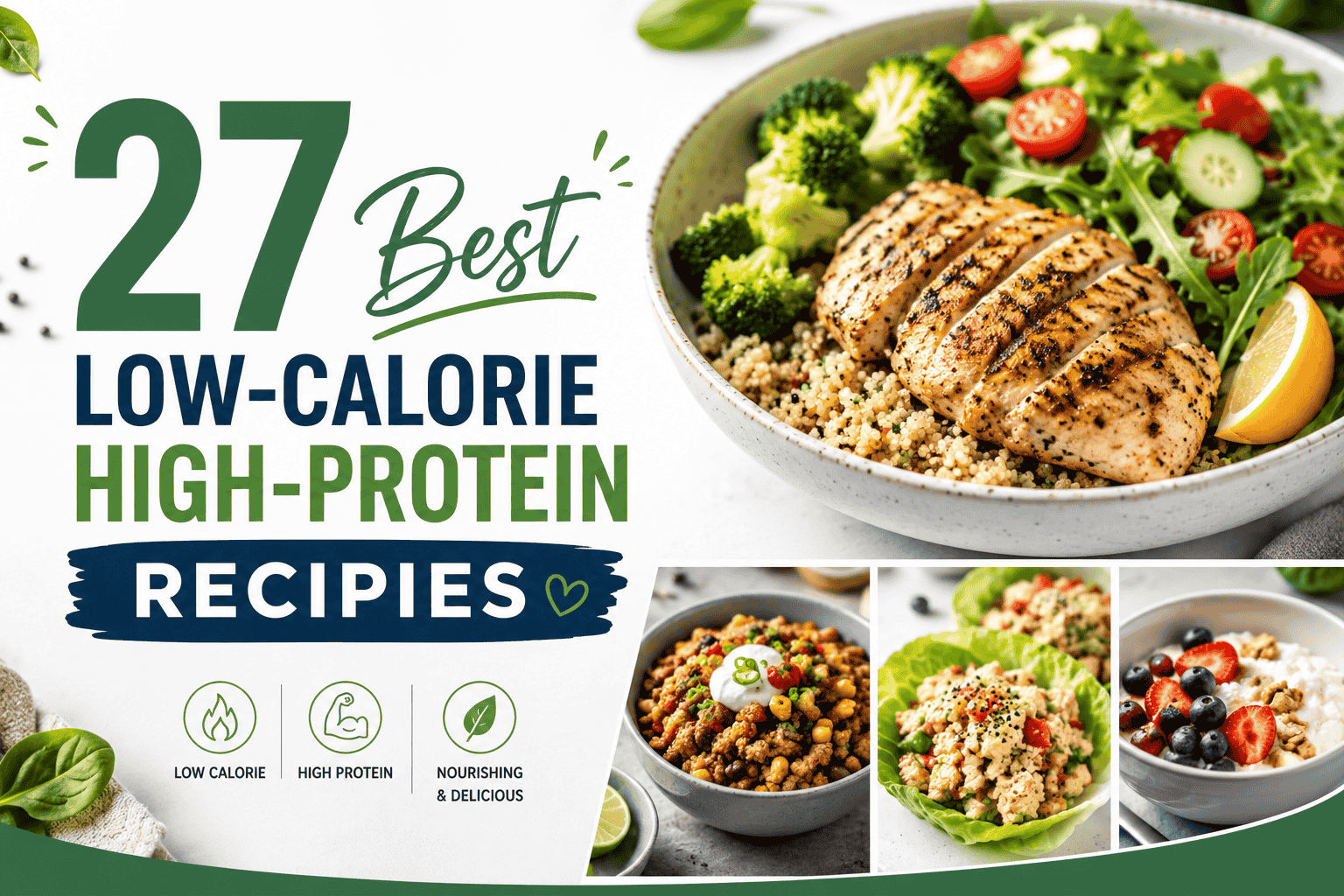
27 Best Low-Calorie
High-Protein Recipes
Meals that hit 30g+ of protein under 500 calories — without the bland chicken-and-broccoli monotony that makes most diet plans fail.
There’s a reason most “healthy eating” plans collapse within two weeks: they leave you hungry, bored, and resentful. The people who succeed long-term aren’t eating less — they’re eating smarter. Specifically, they’re eating food that is high in protein, which is the single most powerful macronutrient for body composition.
Protein does something remarkable that fat and carbohydrates simply cannot match: it satisfies hunger at the hormonal level. It triggers the release of peptide YY and GLP-1, your body’s two most potent fullness signals, while simultaneously suppressing ghrelin — the hormone that tells your brain you need more food. The result? You eat less, naturally, without white-knuckling your way through hunger.
A landmark study in the American Journal of Clinical Nutrition found that people who increased protein to 30% of their total calories automatically consumed 441 fewer calories per day — without any other dietary instruction. They weren’t told to eat less. The protein did it for them.
Beyond satiety, protein has a higher thermic effect than any other macronutrient. Your body burns 20–35% of protein’s calories just to digest and process it — compared to just 5–15% for carbohydrates and 0–5% for fat. That means a 200-calorie serving of chicken effectively costs closer to 140 net calories once your metabolism goes to work on it.
The 27 recipes in this guide are built around a single, uncompromising rule: every meal must deliver at least 30 grams of protein and stay under 500 calories. No filler. No watered-down portions. No flavour sacrifices. Just practical, delicious meals that work with your biology.
Why High-Protein, Low-Calorie Works When Everything Else Fails
1. Protein Preserves Muscle During a Calorie Deficit
When you cut calories without adequate protein, your body doesn’t just burn fat — it cannibalises muscle tissue for energy. This is metabolically disastrous. Muscle is your body’s primary calorie-burning engine. Lose it and your resting metabolism drops, making future fat loss progressively harder.
Studies show that consuming 1.6–2.2g of protein per kilogram of body weight during a calorie deficit almost completely prevents muscle loss. The recipes in this guide are designed to help you hit that range.
For a 70kg person, that’s 112–154g of protein daily. Spread across 4 meals, that’s 28–38g per sitting — exactly what each recipe in this guide delivers.
2. The Thermic Effect of Food (TEF)
Protein’s thermic effect isn’t just a minor detail — it’s a meaningful caloric advantage. If you eat 200g of plain chicken breast (220 calories), your body spends roughly 55–75 calories processing it. The same caloric value in white bread costs only 10–15 calories to process. Over a day of high-protein eating, this difference can add up to an extra 150–200 calories burned — without any exercise.
3. Blood Sugar Stability = No 3pm Crash
High-protein, lower-carbohydrate meals produce a gentler blood glucose response. Instead of the spike-and-crash cycle that drives afternoon cravings and energy dips, you get a slow, stable energy curve that keeps your concentration sharp and your appetite calm. This is why people who eat high-protein lunches consistently report feeling more alert and less hungry by dinner.
“You don’t need to eat less. You need to eat food that makes your body want to eat less.”
— Principle of Satiety-First NutritionBest Low-Calorie Protein Sources Ranked
All figures per 100g cooked weight. These are the building blocks behind every recipe in this guide.
| Food Source | Protein | Calories | Best For |
|---|---|---|---|
| 🍗 Chicken Breast | 31g | 165 | Every meal type |
| 🐟 Tuna (canned, water) | 30g | 116 | Quick lunches |
| 🍳 Egg Whites | 11g | 52 | Breakfast, baking |
| 🥛 0% Greek Yogurt | 10g | 57 | Snacks, marinades, sauces |
| 🦐 Shrimp / Prawns | 24g | 99 | Stir-fries, bowls |
| 🐟 Salmon | 25g | 182 | Omega-3 meals |
| 🦃 Turkey Breast/Mince | 29g | 135 | Chilli, meatballs, soups |
| 🫘 Cottage Cheese (low-fat) | 11g | 72 | Snacks, flatbreads |
| 🥩 Beef Sirloin (lean) | 28g | 175 | Stir-fries, bowls |
| 🫘 Lentils (red) | 9g | 116 | Soups, plant-based meals |
| 🌱 Edamame | 11g | 121 | Stir-fries, poke bowls |
| 🧊 Firm Tofu | 8g | 76 | Vegan stir-fries, ramen |
All 27 Recipes — Click Any Card for Full Details
Filter by meal type, or browse all 27. Click a card to see the full ingredients list and step-by-step method.
The research on breakfast protein is some of the most compelling in nutritional science. A study from the University of Missouri found that people who ate a 35g protein breakfast consumed 175 fewer calories at dinner — without trying. Their hunger hormones were measurably different for 12+ hours after the meal.
Most people eat a carbohydrate-heavy breakfast (cereal, toast, fruit) and wonder why they’re ravenous by 10am. The problem isn’t willpower. It’s biology. Carbohydrates alone spike blood glucose and trigger insulin, which then crashes blood sugar an hour later — sending powerful hunger signals to the brain.
A 35–40g protein breakfast does the opposite. It stabilises blood glucose, keeps insulin moderate, and sustains satiety through to lunch. This is the single highest-leverage intervention you can make in your eating — and it requires nothing more than knowing which foods to reach for first.
Protein shakes alone don’t count as a complete breakfast. Liquid protein digests rapidly and doesn’t produce the same satiety response as whole-food protein. Add egg whites, Greek yogurt, or cottage cheese alongside your shake for best results.
Lunch is where most diets silently collapse. A “healthy” sandwich with deli meat and salad might look fine on paper but deliver only 15–18g of protein — barely enough to maintain satiety for 90 minutes. By 3pm, the snacking begins. By 5pm, the willpower is gone.
The lunch recipes in this guide are engineered to hit the 35–45g protein range while staying under 450 calories. That combination keeps you in a solid calorie deficit while delivering the protein your muscles need to maintain mass. Tuna poke bowls, salmon nicoise, buffalo chicken wraps — food that doesn’t feel like diet food, but performs like it.
“A 400-calorie lunch with 40g protein is ten times more effective at preventing overeating than a 300-calorie lunch with 15g protein.”
— Applied Nutrition PrincipleDinner is often where the most calories are consumed — not because people are more hungry at night, but because the cumulative protein deficit from earlier in the day has caught up with them. Fix breakfast and lunch protein, and dinner portions naturally regulate.
The dinner recipes here prioritise slow-digesting proteins — turkey, beef, salmon, lentils — which release amino acids steadily overnight, supporting muscle repair during sleep. They’re also genuinely satisfying: stuffed peppers, beef stir-fry, turkey meatballs in tomato sauce. Meals you’d make even if you weren’t counting macros.
6 Habits That Make High-Protein Eating Effortless
Before deciding anything else about a meal, pick your protein source first. Build the meal outward from it. This one mental habit prevents hundreds of under-protein meals per year.
Grill 600g of chicken breast, hard-boil 8 eggs, and portion out 4 servings of Greek yogurt every Sunday. With protein cooked and ready, high-protein meals take 5 minutes to assemble all week.
The reason people hate “diet food” is blandness. Spices, acids (lemon, vinegar), fresh herbs, and chilli add massive flavour at zero calories. A well-seasoned 400-calorie meal beats a bland 250-calorie meal every single time for adherence.
Drink 400ml of water 15–20 minutes before each meal. Research shows this reduces meal size by 13% on average. Combined with high-protein eating, the hunger-management effect is compounded.
Chicken loses 25–30% of its weight during cooking. If you weigh 150g of cooked chicken and log it as 150g, you’re undercounting protein by nearly 40g. Always weigh protein sources raw for accurate tracking.
Greek yogurt and cottage cheese are rich in casein protein, which digests slowly over 6–8 hours. A 150-calorie serving before bed delivers a sustained amino acid drip overnight, protecting muscle tissue while you sleep.
Real Questions, Honest Answers
No — 30g per meal is not overkill. It’s actually the minimum for maximising muscle protein synthesis in most adults. Research by Dr Stuart Phillips at McMaster University established that 30–40g of high-quality protein per meal is the threshold required to fully stimulate muscle-building pathways. Below 20g, the response is significantly blunted. Above 40g at one sitting, there’s diminishing return. The sweet spot is exactly where these recipes land.
Absolutely. Greek yogurt, cottage cheese, eggs, edamame, tofu, lentils, and hemp seeds are all excellent high-protein plant or dairy options. This guide includes several fully plant-based and vegetarian recipes (Tofu Stir-Fry with Edamame, Lentil & Turkey Soup can be made fully plant-based, Protein Cookie Dough Bites, and more). The key with plant proteins is combining sources to ensure a complete amino acid profile.
This is a persistent myth with no scientific basis in healthy individuals. The concern about protein and kidneys stems from studies of people with pre-existing kidney disease, where dietary protein restriction is sometimes appropriate. For healthy people, decades of research — including long-term studies on athletes consuming 2g+ protein per kg bodyweight — show no negative kidney effects. If you have a known kidney condition, consult your doctor. Otherwise, 30–40g protein per meal is completely safe.
Most people notice two things within the first week: they feel significantly less hungry between meals, and they naturally eat less without trying. Body composition changes (less fat, more visible muscle) typically become noticeable after 4–6 weeks of consistent high-protein eating. The exact rate depends on your starting point and total calorie intake, but the hunger and energy improvements are almost always felt within days — which is why this approach is far more sustainable than calorie restriction alone.
Not indefinitely. Tracking for 2–3 weeks is valuable for building intuitive portion awareness — once you understand what 35g of protein looks like in various foods, you don’t need an app anymore. These recipes take the guesswork out entirely: every one is pre-calculated and verified. Simply follow the recipe, and the macros take care of themselves.
Start With One Recipe. Build From There.
The biggest mistake people make with nutrition change is trying to overhaul everything at once. The sustainable path is simpler: pick one meal to upgrade this week. Replace your usual breakfast with the Egg White Veggie Scramble or the Overnight Oats with Whey. Do that for five days. Notice how you feel.
Then swap one lunch. Then one dinner. Within three weeks, you’ll have replaced most of your eating with meals that are genuinely more satisfying, more nutritious, and — critically — meals you actually want to eat again. That’s not a diet. That’s a new baseline.
The 27 recipes in this guide aren’t a temporary fix. They’re a permanent vocabulary of meals you can rotate through for years, tweaking ingredients, adjusting spices, adapting to seasons. Master a handful of them and your relationship with food changes permanently — for the better.
The goal isn’t perfect eating. It’s making protein-first, lower-calorie meals your default — so that the occasional indulgence barely registers in the context of everything else you eat. Build the default, and the results follow automatically.