
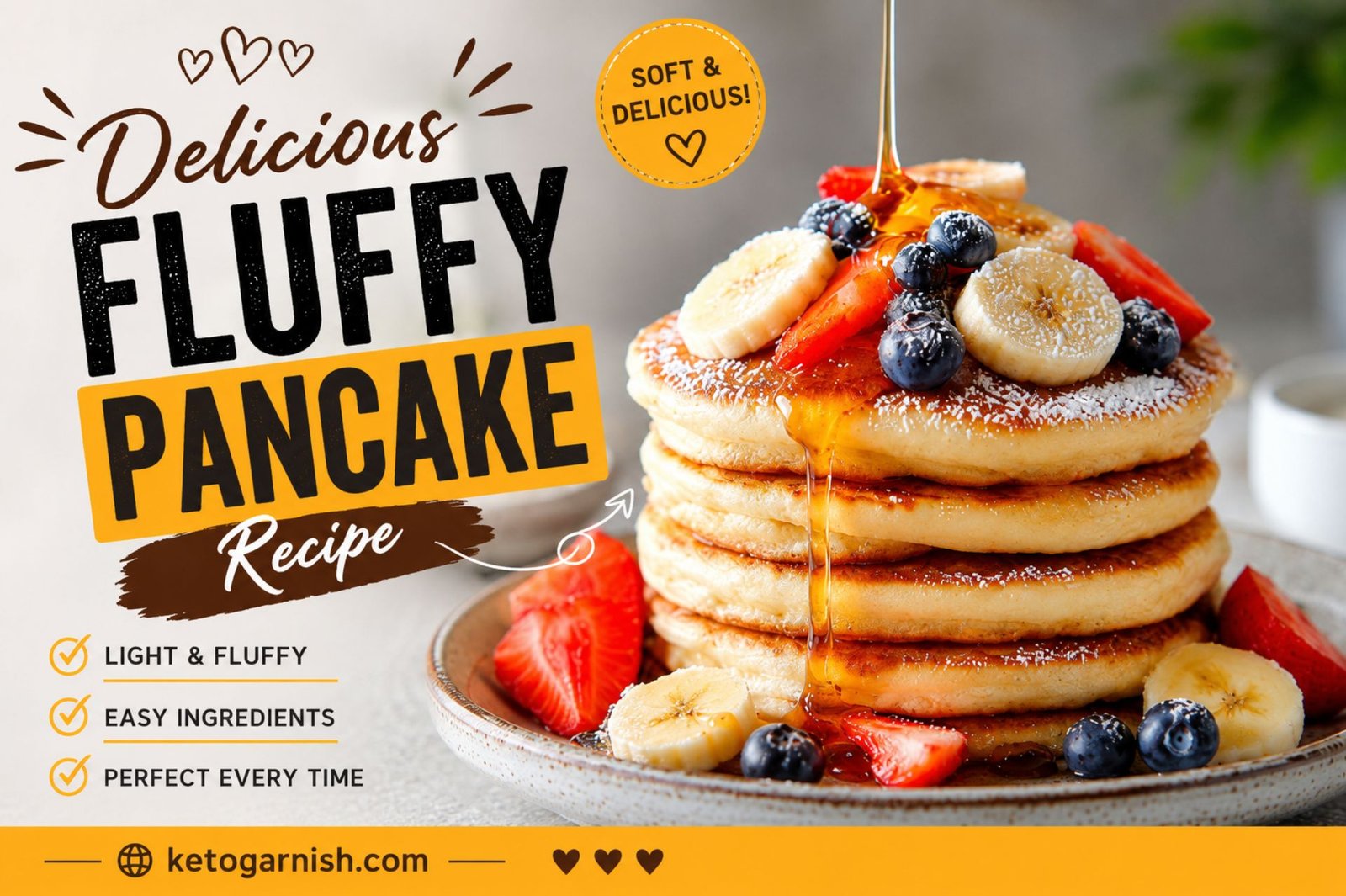
The Pancake Recipe That Finally Lives Up to the Word “Fluffy”
You’ve followed the recipe. You’ve watched the video. And somehow you’re still staring down a stack of flat, rubbery discs while a hungry table waits. Here’s the good news: pancake failure is almost never about effort — it’s a handful of small, fixable habits. Get those right, and this exact batter turns into tall, cloud-soft pancakes every time.
Four Ways Pancakes Go Wrong (And Why It’s Not Your Fault)
Pancake batter is about as simple as cooking gets — four dry ingredients, a few wet ones, one bowl. So when it goes wrong, it’s rarely about skill. It’s almost always one of these four things.
They Come Out Flat
You mix, you pour, you wait for the rise — and nothing happens. This is almost always tired leavening. Baking powder loses its punch every day it sits open in a humid cupboard, and by month six it’s doing next to nothing.
They’re Tough or Rubbery
This one’s almost always overmixing. The second flour meets liquid, gluten starts developing — the same protein that makes bread chewy. Stir until the batter looks silky and pretty, and you’ve built bread dough by accident.
Burnt Outside, Raw in the Middle
High heat looks efficient — until the outside sets and browns in 90 seconds while the center is still batter. It’s the most common reason people quietly give up on stovetop pancakes for a box mix.
They Stick, Even on Nonstick
A pan that’s too hot micro-welds a pancake’s sugars to the surface before a crust has a chance to form — and it happens on nonstick just as easily as on cast iron.
The 3 Rules of Fluffy, in Order of Importance
- Fresh leavening. Non-negotiable — it’s the engine behind every bit of rise.
- Don’t overmix. Lumpy batter is correct batter; smooth batter is tough batter.
- Rest before you cook. Five to ten minutes lets the flour hydrate and the baking powder start working, so pancakes rise up instead of spreading out.
Classic Fluffy Buttermilk Pancakes
This is the base recipe every fix above was built around — a genuinely foolproof buttermilk batter that puffs up tall on the griddle and still tastes soft the next morning. One bowl, no resting overnight, about 25 minutes start to finish.
Dry Ingredients
- 2 cups (250g) all-purpose flour
- 3 tbsp (37g) granulated sugar
- 2 tsp baking powder (fresh — see tips)
- 1/2 tsp baking soda
- 3/4 tsp fine salt
Wet Ingredients
- 2 large eggs, room temperature
- 1 3/4 cups (415ml) buttermilk, room temp
- 1/3 cup (75g) unsalted butter, melted
- 1 tsp vanilla extract
Equipment
Method
Whisk the dry ingredients
In a large bowl, whisk together the flour, sugar, baking powder, baking soda, and salt until evenly combined. This spreads the leavening through the flour, so every pancake rises evenly — not just the ones that happen to catch a clump of baking powder.
Whisk the wet ingredients separately
In a jug, whisk the eggs until broken up, then add the buttermilk, melted butter, and vanilla. Pour the melted butter in slowly while whisking, or it can seize into little flecks against cold buttermilk.
Combine — gently
Pour the wet mixture into the dry and fold with a spatula just until you stop seeing streaks of dry flour, about 10–15 strokes. The batter should look thick and slightly lumpy, not silky-smooth.
Let it rest
Set the batter aside for 5–10 minutes. This step feels optional. It isn’t — it’s where the flour finishes hydrating and the baking powder starts building the bubbles that make the pancakes rise instead of spread.
Heat the pan
Warm a griddle or nonstick pan over medium-low heat for a couple of minutes, then wipe on a thin film of butter. Test with a drop of water — it should sizzle and dance for a couple of seconds. If it vanishes instantly, pull the heat back.
Cook in batches
Pour a scant 1/4 cup of batter per pancake. Cook undisturbed for 2–3 minutes, until bubbles rise steadily across the surface and the edges look matte and set. Flip once, then cook 1–2 minutes more until deep golden. Don’t press down with the spatula — that’s the air escaping, and air is the whole point.
Keep warm and serve
Transfer finished pancakes to a wire rack in a 200°F (95°C) oven while you cook the rest — stacking straight onto a plate traps steam and softens the crust. Serve warm, stacked tall, with syrup, berries, banana, and a dusting of powdered sugar.
Pro Tips
- No buttermilk? Stir 1 tbsp lemon juice or white vinegar into 1 3/4 cups whole milk and let it sit 5–10 minutes until slightly thickened.
- For deeper flavor, swap the melted butter for browned butter — cook it a minute past melted until it smells nutty, then cool slightly before using.
- Keep every pancake the same size with a 1/4-cup measure so they all finish cooking together.
- Add chocolate chips or extra blueberries on top of each pancake right after pouring — stirring add-ins into the batter can bruise it and tint it grey-purple.
Great On Top
Make-Ahead, Storage & Freezing
Pancakes are one of the best make-ahead breakfasts there is, as long as you store them right.
Fridge
Cool completely, then store airtight for up to 3 days.
Freezer
Freeze in a single layer until solid, then bag with parchment between layers — up to 2 months.
Reheating
Straight from frozen in a toaster or a 350°F (175°C) oven, 8–10 minutes. Skip the microwave — it steams them soft.
Batter
The dry mix keeps airtight up to a month; add the wet ingredients fresh the morning you cook.
Watch the Whole Method in Under 5 Minutes
If you’d rather watch than read, here’s the technique from bowl to plate — including exactly what the batter and the bubbles should look like at each stage.
Video: “Best Buttermilk Pancakes Recipe – Light and Fluffy!” — embedded via YouTube.
Pancake Questions, Answered
The questions people actually search at 8am on a Saturday, mid-batter.
Why are my pancakes flat instead of fluffy?
Nine times out of ten, it’s the baking powder — either it’s old, or the batter sat too long before hitting the pan. Use fresh leavening and cook within about 15–20 minutes of mixing.
Why are my pancakes rubbery or tough?
Overmixing. Stirring develops gluten, which is great in bread and bad in pancakes. Fold just until the dry flour disappears — small lumps are exactly what you want to see.
Can I make the batter the night before?
You can refrigerate the wet and dry ingredients separately overnight, then combine them cold the next morning. Fully mixed batter left overnight loses most of its rise, since the baking powder’s bubbles have nowhere left to go by the time it hits the pan.
What can I use instead of buttermilk?
Stir 1 tablespoon of lemon juice or white vinegar into 1 3/4 cups of whole milk and let it sit 5–10 minutes until it thickens slightly. It won’t taste identical to real buttermilk, but it reacts the same way with the baking soda.
Why do my pancakes stick even in a nonstick pan?
Usually the pan is too hot, which sets the sugars into the surface before a crust can form, or there’s too little fat to begin with. A thin wipe of butter between batches over medium-low heat solves both.
Can I freeze pancakes, and how do I reheat them?
Yes — freeze in a single layer until solid, then bag with parchment between layers. Reheat straight from frozen in a toaster or a 350°F (175°C) oven for 8–10 minutes, so they crisp back up instead of turning soft.
Can I make this gluten-free or dairy-free?
For gluten-free, a 1:1 measure-for-measure gluten-free flour blend that already includes xanthan gum works well here. For dairy-free, swap the buttermilk for a plant milk soured with a tablespoon of lemon juice, and use a neutral oil or dairy-free butter in place of the melted butter.
However You Stack Them
Fluffy pancakes were never about a secret ingredient — they were about fresh leavening, a light hand, and a little patience while the batter rests. Make this recipe once with those three things in mind, and it stops being a recipe you’re “trying” and starts being the one you just make.