
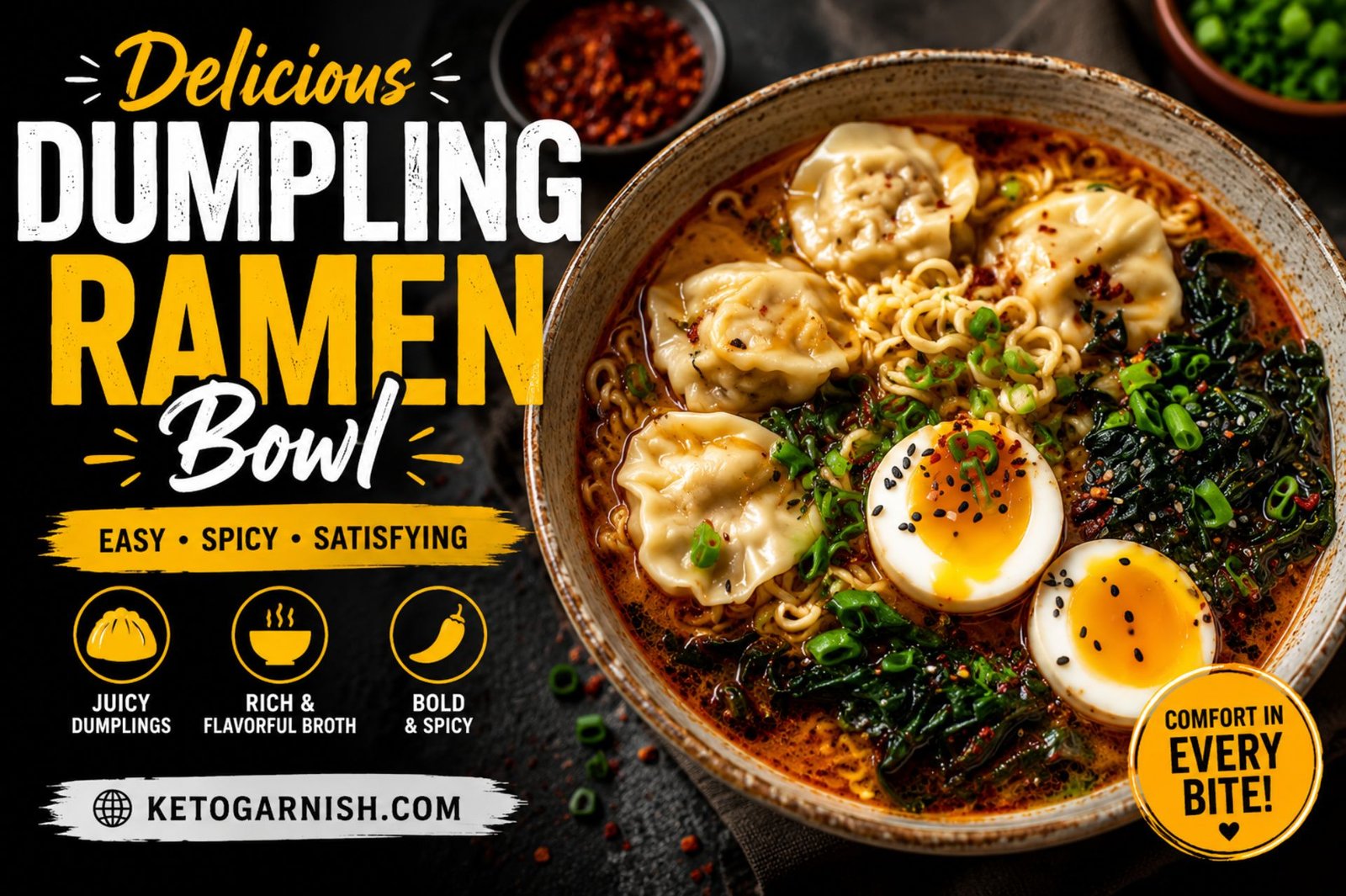

Dumpling Ramen Bowl
A chili-warmed broth, jammy eggs, and dumplings that don’t fall apart — built to fix the exact things that go wrong with homemade ramen.
It’s one of those evenings — the kind where you walk in the door cold and a little frayed, and the fridge has nothing that sounds good. You don’t want takeout again. You don’t want another sad bowl of plain instant noodles either. You want something that feels like it took effort, without actually taking effort. That’s this bowl.
This dumpling ramen bowl was built to solve the three things that actually go wrong when people try to make “restaurant-style” ramen at home: broth that tastes flat and one-note, dumplings that split open and turn the pot cloudy, and eggs that come out either chalky-hard or a total mess to peel. Fix those three things and everything else — the noodles, the greens, the garnish — takes care of itself.
Built to solve real kitchen problems
These aren’t random tips. Each one answers a specific complaint people actually have about making ramen at home.
“My broth always tastes flat.”
Sautéing garlic and ginger in sesame oil before the liquid goes in — plus a spoon of miso — gives you deep, layered flavor in minutes, no 12-hour stockpot required.
“My dumplings split apart.”
A gentle simmer instead of a rolling boil, plus a short thaw before they hit the pot, keeps the wrappers intact — clear broth, whole dumplings, every time.
“My eggs never come out jammy.”
An exact timer, not a guess: 6.5 minutes from a boil, straight into ice water. Consistent, gorgeous, orange-gold every time — and easy to peel.
“I don’t have 45 minutes.”
Everything simmers in one pot, in an order that overlaps naturally — eggs first, broth while they cool, dumplings and noodles last. On the table in half an hour.
Ingredients & equipment
Straightforward grocery-list ingredients. No specialty trip required — everything here lives in a regular supermarket.
For the bowl
- 8–10Frozen dumplings or gyoza (pork, chicken, or veggie)Potstickers and wontons work too — just adjust simmer time to the package.
- 2 blocksRamen noodles, seasoning packet discardedSwap for shirataki or konjac noodles for a low-carb bowl.
- 4 cupsChicken or vegetable broth
- 2 tbspSoy sauce or tamari
- 1 tbspToasted sesame oil
- 1 tbspWhite or yellow miso pasteOptional, but this is the deep-flavor shortcut.
- 1–2 tspChili crisp or chili garlic sauce, to taste
- 3 clovesGarlic, minced
- 1 tspFresh ginger, grated
For the toppings
- 2 largeEggs, for jammy soft-boiled halves
- 3 cupsBaby kale or spinach, roughly choppedKale needs a longer simmer than spinach — see the steps.
- 2Green onions, thinly sliced
- 1 tspBlack and white sesame seeds
- To tasteRed chili flakes or gochugaru
- OptionalExtra chili oil drizzle, for serving
Step-by-step method
Read this through once before you start — the order matters, and it’s what keeps this recipe to 30 minutes.
Soft-boil the eggs first
Bring a small pot of water to a rolling boil. Lower the eggs in gently with a spoon and set a timer immediately.
Cook for exactly 6.5–7 minutes, then transfer straight into a bowl of ice water for at least 5 minutes. This stops the cooking and makes peeling far easier.
⏱ 6.5–7 min boil + 5 min ice bathBuild the broth base
In a large pot over medium heat, warm the sesame oil and sauté the garlic and ginger for about 30 seconds, just until fragrant — not browned.
Pour in the broth, soy sauce, and miso. Whisk the miso in against the side of the pot so it dissolves smoothly instead of clumping. Bring to a gentle simmer.
Simmer the dumplings — don’t boil them
Slide the dumplings into the simmering (not boiling) broth. A hard boil is what tears wrappers open; a gentle simmer cooks them through while they hold their shape.
Let them cook for 6–8 minutes, until they float and the filling is heated through.
⏱ 6–8 min, gentle simmerAdd the noodles and greens
Nudge the dumplings to one side and add the ramen noodles. Cook for 2–3 minutes, stirring gently to separate the strands.
Stir in the kale (or spinach) during the last minute — kale wants that extra minute to soften; spinach wilts almost instantly, so add it last if you’re using it instead.
Stir in the heat
Off the heat, stir in the chili crisp or chili garlic sauce a little at a time, tasting as you go. This is the moment to make the bowl as mild or as fiery as you actually want it.
Assemble and garnish
Divide noodles, dumplings, and greens between bowls and ladle the hot broth over the top. Peel the eggs, slice them in half, and set them on top so the yolk faces up.
Finish with green onions, sesame seeds, and a pinch of chili flakes. Serve immediately, while the broth is still steaming.

Fix it before it happens
The exact problems people search for at 6pm, mid-recipe — answered before you get there.
The broth tastes thin or one-note.
Add miso and soy sauce in small increments rather than all at once, tasting between additions. A small splash of rice vinegar right at the end brightens everything — it’s the ingredient most home broths are missing.
Dumplings burst and cloud the broth.
Keep the broth at a gentle simmer, never a rolling boil, once the dumplings go in. If they’re rock-hard frozen, let them sit at room temperature for 5 minutes first so the wrapper doesn’t crack from the temperature shock.
Yolks turn out chalky, or the shells won’t peel cleanly.
Stick to the 6.5–7 minute window and always shock the eggs in ice water immediately. Slightly older eggs (5–7 days from purchase) peel more cleanly than very fresh ones — a genuinely useful, non-obvious trick.
Noodles turn soft and gluey if the bowl sits.
Noodles keep absorbing broth even off the heat. If you’re not eating immediately, keep the noodles and broth in separate containers and combine only right before serving.
Kale tastes tough or slightly bitter.
Strip the thick ribs before chopping, and give kale the full extra minute of simmering the recipe calls for. If it’s still assertive for your taste, swap in baby spinach, which wilts sweet in under 30 seconds.
See the technique in motion
If you’d rather watch the simmer-not-boil technique and egg timing in action before you start, this walks through a very similar spicy ramen method.
Swaps & variations
Swap the ramen noodles for shirataki or konjac noodles, rinsed well and dry-toasted for a minute before adding to the broth to remove excess moisture.
Use vegetable broth and veggie dumplings. The miso and sesame oil carry plenty of savory depth on their own — you won’t miss the meat.
Choose gluten-free tamari, rice noodles in place of ramen, and confirm your dumpling wrappers are labeled GF.
Add sliced mushrooms or a soft-scrambled egg mixed into the broth for more body, or stir in shredded rotisserie chicken.
Storage & meal prep
This bowl is friendliest to prep in pieces rather than fully assembled. The broth freezes well for up to 3 months — cool it completely first, then freeze flat in a zip bag. Cooked dumplings and noodles keep in the fridge for up to 3 days in a separate airtight container. Soft-boiled eggs hold in their shells, unpeeled, in the fridge for 2 days — peel just before serving, since the yolk firms up slightly the longer they sit. When you’re ready to eat, reheat the broth to a simmer and warm everything else through for a minute or two.
FAQ
Can I use frozen dumplings straight from the freezer?
Yes — most of the time you can add them frozen directly to the simmering broth, just extend the cook time by a minute or two. If they’re a very thin-wrappered variety, let them sit at room temperature for 5 minutes first so the wrapper doesn’t crack from the sudden heat.
Is this ramen bowl keto-friendly?
The broth, toppings, and eggs are naturally low-carb. The main carb source is the noodles — swap regular ramen for shirataki or konjac noodles to bring the dish in line with a keto approach, and double-check your dumpling wrapper and chili crisp for added sugar.
What’s the best broth for deep flavor without a long simmer?
Start with a good store-bought chicken or vegetable broth as your base, then build flavor fast with sautéed garlic and ginger, a spoon of miso, soy sauce, and toasted sesame oil. That combination mimics hours of simmering in about five minutes.
Can I meal prep this for the week?
Yes — prep the broth, dumplings, and noodles in separate containers so the noodles don’t turn mushy from sitting in liquid. Combine and reheat individual portions as you go, and peel soft-boiled eggs fresh each time.
What dumplings work best in a ramen bowl?
Classic gyoza or potstickers hold their shape well in broth. Wontons work too, though their wrapper is thinner and cooks faster — start checking for doneness a minute or two earlier than you would with gyoza.
Recipe recap
Dumpling Ramen Bowl
Warm, spicy, and satisfying — comfort in every bite.
Ingredients
- 8–10 frozen dumplings
- 2 blocks ramen noodles
- 4 cups chicken or veg broth
- 2 tbsp soy sauce
- 1 tbsp sesame oil
- 1 tbsp miso paste (optional)
- 1–2 tsp chili crisp, to taste
- 3 cloves garlic, 1 tsp ginger
- 2 large eggs
- 3 cups baby kale or spinach
- 2 green onions, sesame seeds, chili flakes
Method
- Boil eggs 6.5–7 min, then ice bath.
- Sauté garlic and ginger in sesame oil; add broth, soy sauce, miso; simmer.
- Simmer dumplings 6–8 min (no rolling boil).
- Add noodles 2–3 min; stir in greens.
- Stir in chili crisp to taste, off heat.
- Assemble, top with halved eggs and garnishes, serve hot.
Some nights call for a whole production. This isn’t that. It’s a pot, a timer, and thirty honest minutes — and a bowl that tastes like it took a lot more care than it actually did.
Warm broth, jammy eggs, comfort in every bite. Enjoy it while it’s hot.