
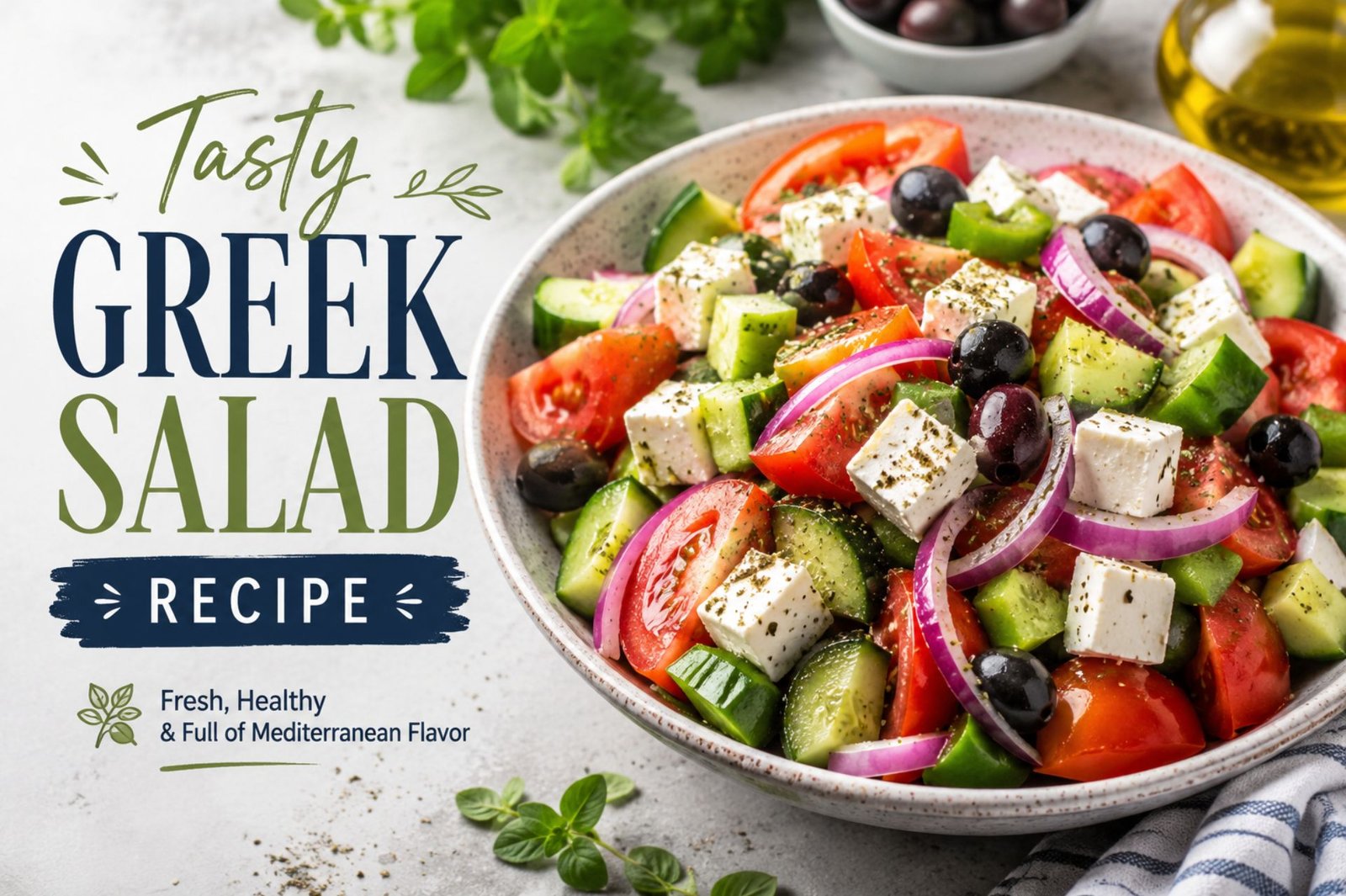
Kitchen Fixes, Not Just Recipes
The Greek Salad
That Finally Doesn’t
Go Soggy
A real horiatiki salad, built the way it’s made in Greek homes — crunchy to the last bite, never watery, never bland. Here’s exactly where most people go wrong, and how to fix it for good.
Why this recipe exists
You’ve made Greek salad before. It probably let you down.
Maybe it looked perfect for the first ten minutes, then sat in a pool of its own juice by the time anyone actually ate it. Maybe the feta turned to paste. Maybe it tasted like watered-down vinegar over vegetables, nothing like the version you had on a trip to Santorini or at your favorite Mediterranean spot. That’s not bad luck — it’s a handful of small, fixable mistakes that almost every home version makes. Once you know them, this becomes the salad you make on repeat: for a Tuesday dinner, for guests, for meal prep, for the one dish at a barbecue that actually disappears first.
The 4 real problems
Where Greek salad usually goes wrong — and the exact fix
These are the actual reasons your salad disappoints, pulled from the most common frustrations people search for and run into in their own kitchens.
Problem 1 — It turns into a watery mess
Tomatoes and cucumbers are mostly water. Salt them and let them sit, and that water has nowhere to go but into your bowl, diluting every bit of flavor and drowning your dressing within the hour.
Problem 2 — It tastes flat, no matter how much you season
Bottled dressing or a lazy oil-and-vinegar drizzle can’t compete with the real thing. Most home versions also skip curing the onion, so raw sharpness overpowers everything else.
Problem 3 — The feta disappears into mush
Pre-crumbled feta from a bag is drier, saltier, and turns chalky the second it hits dressing. Crumbling it too finely by hand does the same thing — you lose the creamy bite that makes this salad feel special.
Problem 4 — It’s perfect on day one, sad by day two
Anyone meal-prepping this salad knows the pain: gorgeous on Sunday, a soggy pile by Tuesday. Most recipes just don’t account for storage.
The full recipe
Classic Horiatiki Greek Salad
This is the real village-style salad — big, chunky pieces, a punchy homemade dressing, and a slab of feta on top instead of crumbles. No lettuce, no shortcuts, no soggy bowl by the time you sit down to eat.
Horiatiki Salad
Ingredients
- 4 large ripe tomatoes, cut into chunky wedges
- 1 large English cucumber, seeded, thick half-moons
- 1 green bell pepper, sliced into rings
- ½ small red onion, thinly sliced
- ¾ cup Kalamata olives, whole, unpitted
- 200 g block feta cheese, in brine
- 4 tbsp extra virgin olive oil
- 1½ tbsp red wine vinegar
- 1 tsp dried oregano, rubbed between palms
- to taste sea salt and cracked black pepper
Method
- Cure the onion. Slice the red onion thinly and place it in your serving bowl with the vinegar. Let it sit while you prep everything else — this softens the sharp bite.
- Cut the vegetables in big pieces. Tomatoes into wedges, cucumber into thick half-moons, pepper into rings. Small dice loses juice and turns the salad mushy — chunky pieces hold their texture.
- Drain the tomatoes. If your tomatoes are very juicy, let the wedges sit in a colander for 5 minutes and gently pat dry before adding to the bowl.
- Build the salad. Add tomatoes, cucumber, pepper, and olives to the bowl with the onion and vinegar. Drizzle with olive oil, season with salt and pepper, and toss gently by hand.
- Finish traditional-style. Place the whole feta block on top, sprinkle generously with oregano, and add one final drizzle of olive oil over the cheese.
- Serve immediately. Break the feta into chunks at the table with a spoon so it stays creamy, not mushed into the dressing.
Beyond the recipe
Small habits that make it taste like a restaurant made it
These are the details that separate an average bowl from the one people ask you for the recipe of.
Use tomatoes at true room temperature, never fridge-cold. Cold mutes sweetness — this single swap changes the whole flavor of the salad.
Buy olives with pits, not pitted. Pitted olives are processed longer and lose depth of flavor — the extra 30 seconds of eating around a pit is worth it.
Season the salad twice — a light pinch of salt while assembling, then taste again right before serving. Feta already brings salt, so under-season early and adjust at the end.
Let the dressed salad rest 5 minutes, uncovered, before eating. This short rest lets the oregano and vinegar actually reach the vegetables instead of sitting on the surface.
Make it yours
Variations that solve specific cravings
The base recipe stays traditional. These swaps answer the most common “can I make this…” questions.
Want it as a full meal?
Add grilled chicken thigh, shrimp, or chickpeas after cooking and cooling slightly, tossed in with the vegetables. Keeps it a proper dinner, not just a side.
Dairy-free or vegan?
Swap the feta for a firm marinated tofu cube or a store-bought plant-based feta. Add an extra pinch of salt since dairy feta carries more natural saltiness.
Cooking for spice lovers?
Add thin rings of fresh green chili or a pinch of Aleppo pepper with the oregano. It’s not traditional, but it works surprisingly well with the acidity.
Prepping for a party?
Double every vegetable, but keep dressing, feta, and olives separate until 15 minutes before guests arrive. Toss table-side for a salad that looks freshly made.
Questions people actually ask
Greek Salad FAQ
Q. Is Greek salad actually healthy?
Yes — it’s naturally low-carb, high in fiber and healthy fats from the olive oil and olives, and packed with vitamin C and potassium from the vegetables. Feta adds protein and calcium. Keep portions of oil moderate if you’re watching calories closely; the vegetables themselves are very light.
Q. Can I make it ahead of time?
Chop the vegetables and make the dressing up to a day ahead, but store them separately and combine right before serving. A fully assembled salad starts breaking down after about 30–45 minutes.
Q. What’s the best feta to use?
Greek PDO feta made from sheep’s milk (or a sheep-and-goat blend), sold as a block in brine, gives the creamiest texture and most authentic tang. Avoid pre-crumbled feta in bags — it’s drier and often blended with cow’s milk, which changes the flavor.
Q. Why does my dressing taste harsh or too acidic?
You likely used too much vinegar relative to oil, or added it before letting the onion mellow. Stick to a 3-parts-oil to 1-part-vinegar ratio, and always start your onion curing before you add vinegar to the rest of the salad.
Q. Can I use regular table onions instead of red onion?
You can, but red onion is traditional for a reason — it’s milder and adds color. If using a stronger white or yellow onion, cure it in the vinegar for closer to 15–20 minutes to soften the bite.
Fresh, honest, and finally reliable.
Save this one — it’s the version that actually holds up on your table, whether it’s a quiet Tuesday dinner or a table full of guests.